
Your quality inspector just flagged an entire day’s production run. Forty-seven parts cut from premium plate steel, all outside tolerance by 0.015 inches. The material cost alone exceeds $18,000, but that’s just the beginning. Now you’re facing rework, schedule delays, and an uncomfortable phone call to your customer explaining why their delivery will be late.
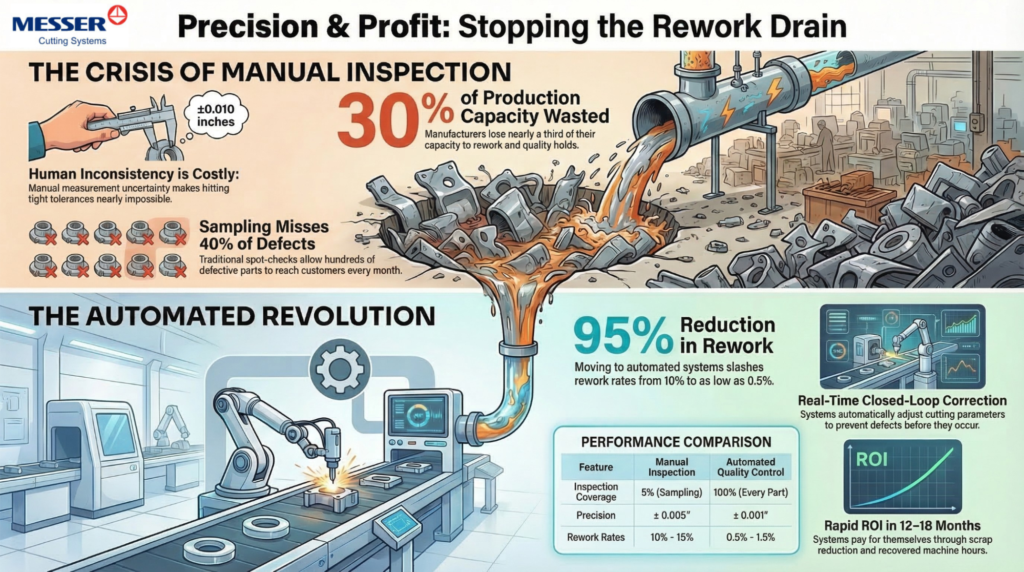
This scenario plays out daily across fabrication shops relying on manual quality inspection. The financial impact extends far beyond scrap costs: manufacturers waste, on average, 20-30% of production capacity on rework, quality holds, and corrective actions that automated quality control systems prevent entirely.
The Hidden Costs Of Quality Failures In Metal Cutting
Quality problems create cascading costs that most shops underestimate. When dimensional accuracy drifts outside specification, profit margins across multiple areas simultaneously decrease.
Material waste represents the most visible expense. A fabrication shop cutting structural components from half-inch steel plate incurs $12 to $18 per pound in waste when parts fail inspection. For large operations processing 50-100 tons monthly, even a 3-5% scrap rate translates to $45,000-$75,000 in annual material losses.
Did You Know? According to the Fabricators & Manufacturers Association, rework consumes 15-25% of total production time in shops lacking automated quality systems, equivalent to running an entire shift just to fix mistakes.
Rework labor compounds these costs significantly. Quality failures discovered after cutting require re-cutting replacement parts, consuming machine time and production capacity that could serve paying customers.
Customer relationships suffer permanent damage when quality issues reach the delivery stage. Late deliveries trigger penalty clauses, erode confidence, and create opportunities for competitors. The lifetime value of lost customers far exceeds the immediate costs of individual quality failures.
Why Traditional Quality Inspection Can’t Keep Up
Manual quality inspection cannot match the consistency and coverage that automated systems deliver. Three fundamental problems create recurring failures.
#1 Sampling Limitations Miss 30-40% Of Defects
Traditional inspection protocols check representative parts rather than every piece produced. This approach means defective parts inevitably reach customers despite inspection efforts. A 5% sampling rate catches only 60-70% of quality issues.
To put this into perspective: a fabshop producing 500 parts daily with a 2% defect rate and a 5% inspection sampling allows approximately six defective parts to pass inspection daily. Over a month, that’s 130-150 defective parts reaching customers.
#2 Delayed Feedback Allows Problems To Compound
What causes most rework in metal cutting? Manual inspection occurs after cutting is complete, meaning defects are discovered only after time, and materials have been wasted. This delayed feedback prevents operators from correcting problems before additional defects occur.
Consider a plasma cutting system that develops torch height sensing. Without real-time monitoring, the system may cut 30-40 defective parts before the first piece reaches inspection.
#3 Human Error Creates Variable Results
Quality control inspectors experience fatigue and measurement inconsistency. The same part measured by different inspectors produces varying results. When customers require accuracy within ±0.010 inches, inspector measurement uncertainty of ±0.005 inches makes reliable verification nearly impossible.
How Automated Quality Control Prevents Defects
What is automated quality control in metal cutting? Automated quality control systems integrate measurement, monitoring, and feedback capabilities directly into cutting operations, creating closed-loop quality management that prevents defects rather than detecting them after they occur.
Modern systems deliver four critical advantages over manual inspection.
Real-Time Dimensional Verification On Every Part
Automated measurement systems verify part dimensions during or immediately after cutting. Laser measurement, vision systems, and coordinate measurement technologies check critical dimensions on every part produced, eliminating sampling gaps.
These systems measure with precision exceeding ±0.001 inches (accuracy impossible with manual methods). Automated measurement eliminates inspector variability, creating reliable quality data for tight tolerance requirements.
Integrated Process Monitoring Catches Problems Early
Advanced quality systems monitor cutting parameters that indicate developing problems before defects occur. Cutting speed variations, torch voltage fluctuations, and consumable wear patterns provide early warning signals.
CNC Control Systems equipped with process control monitoring detect tool wear and calibration drift before these conditions produce out-of-tolerance parts.
Messer’s Intuitive Controls Automatically Correct Issues
The most sophisticated systems don’t just detect problems; they automatically implement corrections. Messers’ adaptive controls use algorithms to adjust cutting parameters in response to material variations, tool wear, material usage, and environmental changes and so much more.
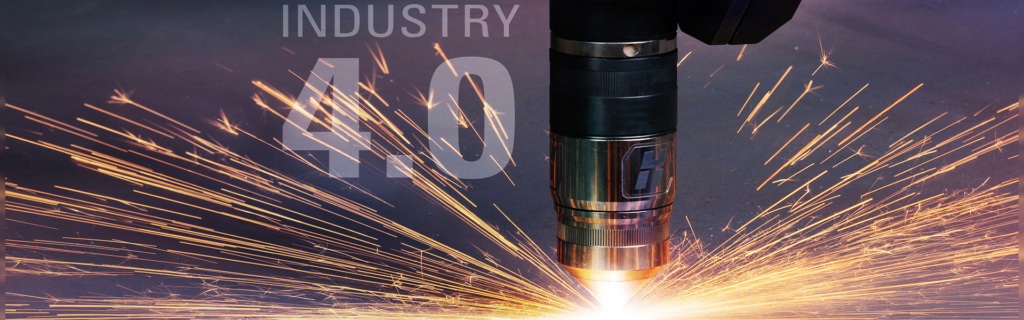
With Industry 4.0, Messer cutting systems’ digital workflow monitors all aspects of the cutting processes throughout the factory floor.
Learn More: Industry 4.0
Complete Documentation For Every Part with Messer software
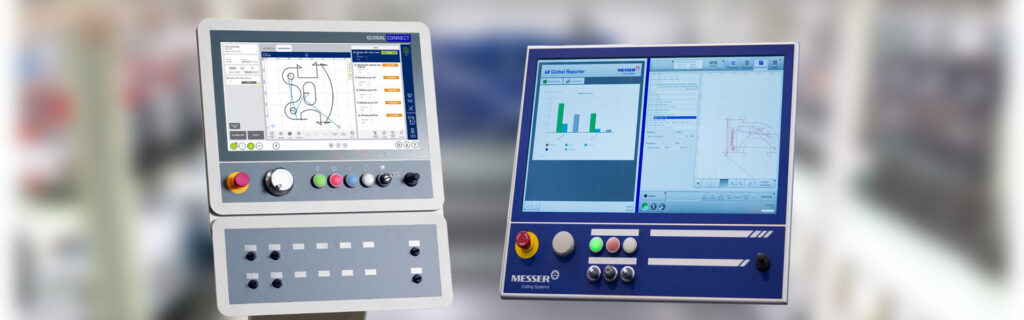
Messers ‘ automated global control systems and software generate measurement data for every part produced, nested, creating detailed reports that support customer requirements and regulatory compliance. For manufacturers serving aerospace or automotive industries with stringent documentation requirements, automated systems provide the measurement data that certifications demand.
The Financial Impact: Real Numbers From Real Operations
How much can automated quality control save? Industry data from the National Institute of Standards and Technology shows automated quality systems reduce rework rates by 85-95% compared to manual inspection approaches.
For a fabrication shop experiencing 10% rework rates, Messer Controls and Software automated systems bring this down to 0.5-1.5%, eliminating 85-90% of rework costs.
Pro Tip: Calculate Your True Quality Costs
Total Quality Cost = (Scrap Material) + (Rework Labor × Hourly Rate) + (Lost Production Capacity × Shop Rate) + (Customer Penalty Costs) + (Inspection Labor)
Direct Savings Example
Consider a mid-sized operation processing $4 million in annual material with 10% rework rates under manual inspection. That’s $400,000 in annual material waste plus associated labor and overhead.
Automated quality control reducing rework to 1% cuts material waste to $40,000 a $360,000 annual savings in direct costs alone. Add recovered labor and capacity, and total savings often exceed $500,000 annually.
Production Capacity Recovery
Eliminating rework recovers substantial capacity. Shops spend 20% of production time on rework gain 20% capacity when automated systems eliminate corrections.
For a shop operating 80 hours weekly, recovering 20% from rework provides 16 additional productive hours, equivalent to two additional operators or the ability to serve 20% more customer demand without equipment investment.
Implementation Strategies For Different Operations
Automated quality control varies based on operation type and quality demands.
High-volume production operations like steel service centers processing thousands of parts weekly require systems with high throughput that maintain pace with production rates.
Tight-tolerance precision work serving industries with exacting requirements needs measurement systems with accuracy exceeding final part tolerances. For parts requiring ±0.005-inch accuracy, measurement systems should provide ±0.001-inch precision.
Multi-process environments operating plasma cutting, laser cutting, and oxyfuel cutting require quality systems that adapt to different cutting technologies.
Building Your Complete Quality System
Effective automated quality extends beyond measurement hardware to integrated systems that prevent problems at every production stage.
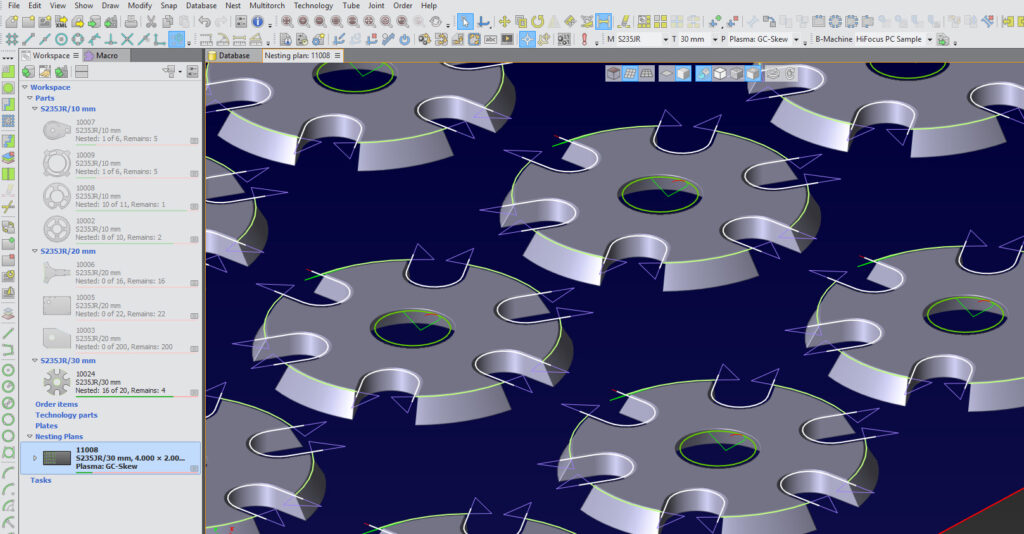
Design and programming validation prevents the most expensive quality failures—those affecting entire production runs. Automated program verification tools simulate cutting operations, identifying errors before any material is cut.
Machine calibration and performance verification ensure cutting equipment maintains dimensional accuracy. Messer’s comprehensive service programs provide systematic calibration services that maintain equipment performance.
Training programs ensure operators effectively leverage quality system capabilities and respond appropriately to system alerts.
Your Next Steps To Automated Quality
Start by documenting your complete quality-related expenses, including scrap costs, rework labor, quality holds, inspection time, and customer quality issues. Most fabricators discover total quality costs reach 8-15% of revenue, far higher than accounting systems reveal.
Engage with technology providers who understand metal cutting quality challenges specific to your processes and industries. Contact Messer’s applications team to discuss quality control solutions matched to your operational requirements and start eliminating rework costs today.
Frequently Asked Questions
Can automated quality systems work with older cutting equipment?
Yes, most cutting systems can be retrofitted to existing cutting Messer machines. Standalone measurement systems, vision systems, and process monitors integrate with older machines without requiring complete equipment replacement. Contact Messer’s retrofit department.
What’s the typical ROI timeline for automated quality systems?
Most fabrication shops achieve payback within 12-24 months. High-volume operations, or those with significant quality issues, often see ROI within 6-12 months through immediate reductions in rework and scrap.
How does automated quality control handle custom or one-off jobs?
Messer cutting systems and control systems adapt easily to custom work through programmable inspection routines and flexible measurement protocols. The ability to verify every part regardless of quantity actually provides greater value for custom work than high-volume production. Messers’ Applications Department can assist with any custom applications that need to be addressed and can test cut materials that operators may find difficult to cut.
Do automated systems require specialized operators?
Basic operation requires minimal additional training beyond standard CNC operation. Most systems feature intuitive interfaces designed for shop floor use. Advanced features may require specialized training, like for drilling as an example. Messer wants to ensure that operators have machine operation and software training before signing off on their equipment. Please contact Messer’s Application department for further training.